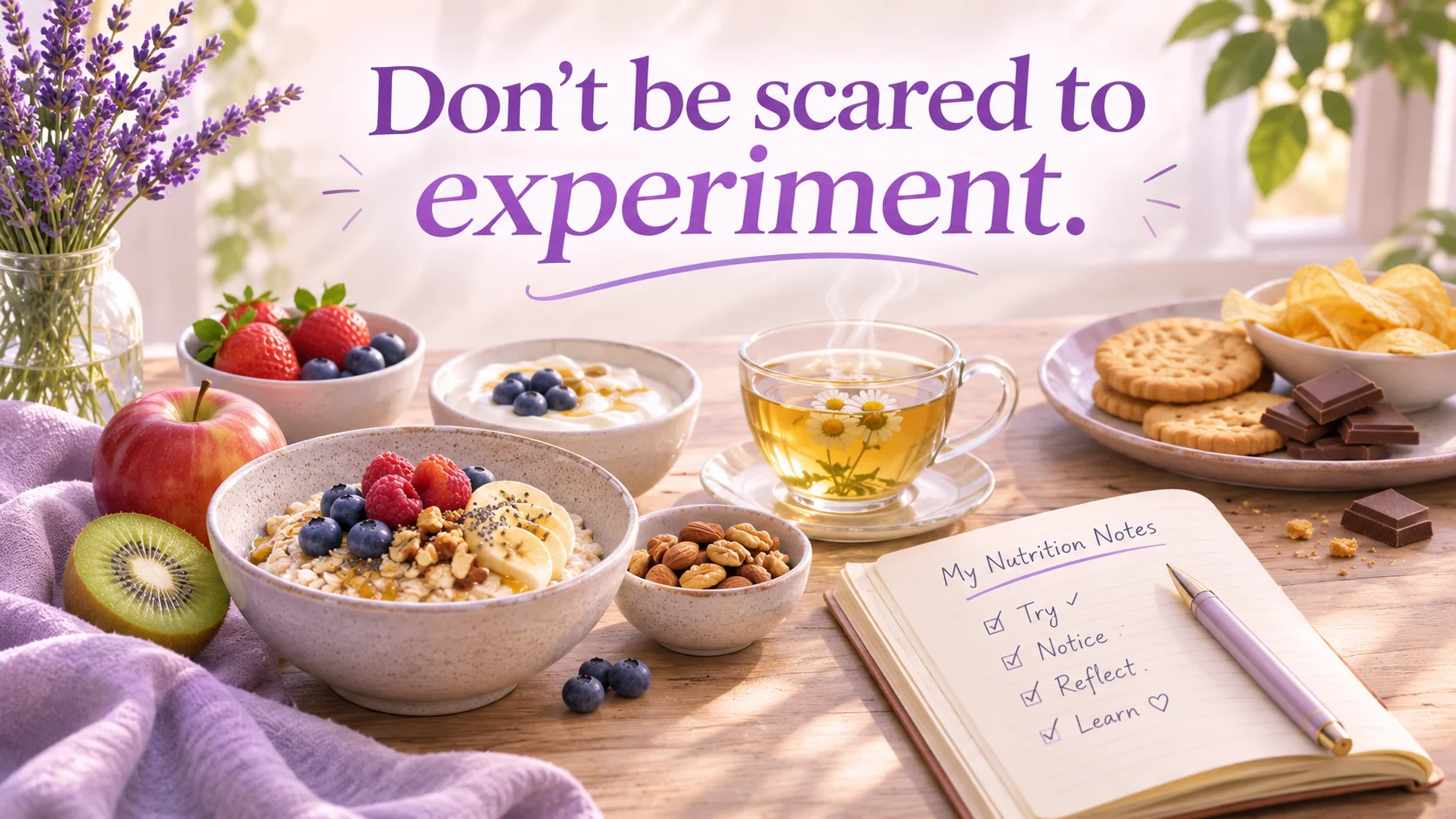
The best way to understand your body’s nutritional needs and requirements is to learn from practice.
Sounds simple, doesn’t it? But let me ask you. How many of us do you think is actually paying attention to diet, eating habits and the effect on our body? And how many of us just eat without thinking about it?
Do you remember the time at school and what difference it made when you were actively listening and engaging in the topic and activities rather than just being absentmindedly present in the class?
Well, this is fairly comparable!
Less you pay attention to the impact of your diet on your body, less you understand how much it affects your physical and mental health.
The reason why I always encourage my clients to experiment with food is because I do it myself. It makes a huge difference to actually feel it rather than just being told. The way we feel after eating balanced meals compared to the way we feel after eating anything and everything.
My latest experiment was falling into bad eating habits. How quick we can fall in and how much time and effort it takes to break out of it.
Personally, I have no food allergy or high intolerance but I keep my gluten and lactose intake low because high consumption doesn’t make me feel well.
I also prefer to go to bed feeling light rather then heavy and stuffed.
Those two factors were the ones I intentionally broke, just to be able to compare the way I feel and am.
I started with evening chilling by TV and an absentminded nibbling. At first, it was in small amounts. Little chocolate or biscuits here and there or small amount of crisps or crackers with cheese. The first two evenings were fine, nothing was in an excessive amount and I felt good. Having it all under control, enjoying well deserved evening.
And that is exactly when the ‘false rewarding’ begins. Sugary foods release dopamine (brain reward path ways being activated) and fatty foods serve as an emotional comfort by activating gut reward pathways.
It literally took me only 2 days to be in control of the amount of food I ate every night. The third night, I wanted more sugar which only made me want more savoury, salted, fatty food. Soon enough I found myself in a loop that I did not really want to break out from because in that very moment it felt good. In other words, I got addicted to it. And yes, as exaggerated as it may sounds, unhealthy food can be compared to any other drug. The pleasant, relaxed feeling, that false rewarding, is an easy addiction. Addiction on substances that poisons our body from the inside and if we’re not careful, it has the power to damage us inside out.
As an addition to the above, I included more gluten and lactose in form of bread, pasta, cakes (my system was already hooked up on sugary and fatty foods) and I ate to satisfy my eyes rather than my stomach. Which obviously and naturally led to increasing the amount of my meals.
Result to all this above was noticeable to me in less than one week. Not only that my stomach was constantly bloated, and my circumference changed with the difference of 2cm around my hips and chest and 4cm around my waist, but my sleeping pattern was badly affected. I felt heavy, slow, sluggish, apathetic, lazy, grumpy, irritated, lost in life direction and all I was looking forward to was my evening reward routine. I stopped exercising for the exercise itself and I exercised for the guilt of overeating.
I kept this experiment going for about 14 days, just to get to the point where I would have to become fully aware of my actions and put a serious effort into breaking through this awful loop.
It took me over 10 days to gain full control back. The brain and gut reward system is a strong opponent, if I can put it that way. It does take an inner fight to resist. It screams at you from everywhere. Every shop, every coffee shop, window adverts, etc. Whenever you smell it, or you see someone else to have it, your neurosystem wants that feeling again. That is the point, where it has to stop.
It is however way too overwhelming to finish with all bad eating habits at once and it has only a small chance to succeed and persist.
At first, I returned to low gluten and lactose intake, which I found to be the easier part. It helped me to feel better during the day in every way that I previously described. Once this was settled, I started to break the evening unhealthy routine, which was more challenging, especially if I stayed up for no other reason than just to sit by the TV.
As already mentioned, food and especially unhealthy food is a drug that we can easily get addicted to. Breaking bad eating habits is as difficult as any other addiction withdrawal. It takes a lot of self-control, full awareness and no excuses.
But as reward, we get body that functions at its finest. We feel good, we look good, we gain confidence and clarity.
What we eat and drink doesn’t only affect the way we look but it has a direct affect on who we are.🙏❤️🍀
